
Published August 1, 2026
Home Prices Are Changing Again—Here's What That Means


Are Home Prices Starting to Rise Again?
For the past couple of years, you've probably seen plenty of headlines predicting falling home prices. While some markets have experienced modest declines, the latest data suggests the national housing market may be starting to shift in the opposite direction.
If you're thinking about buying or selling a home, here's what you should know.
Home Price Growth May Be Picking Up
After peaking in 2024, home price appreciation gradually slowed over the last two years. But recent data shows that slowdown may have reached its lowest point, with prices beginning to trend upward again.
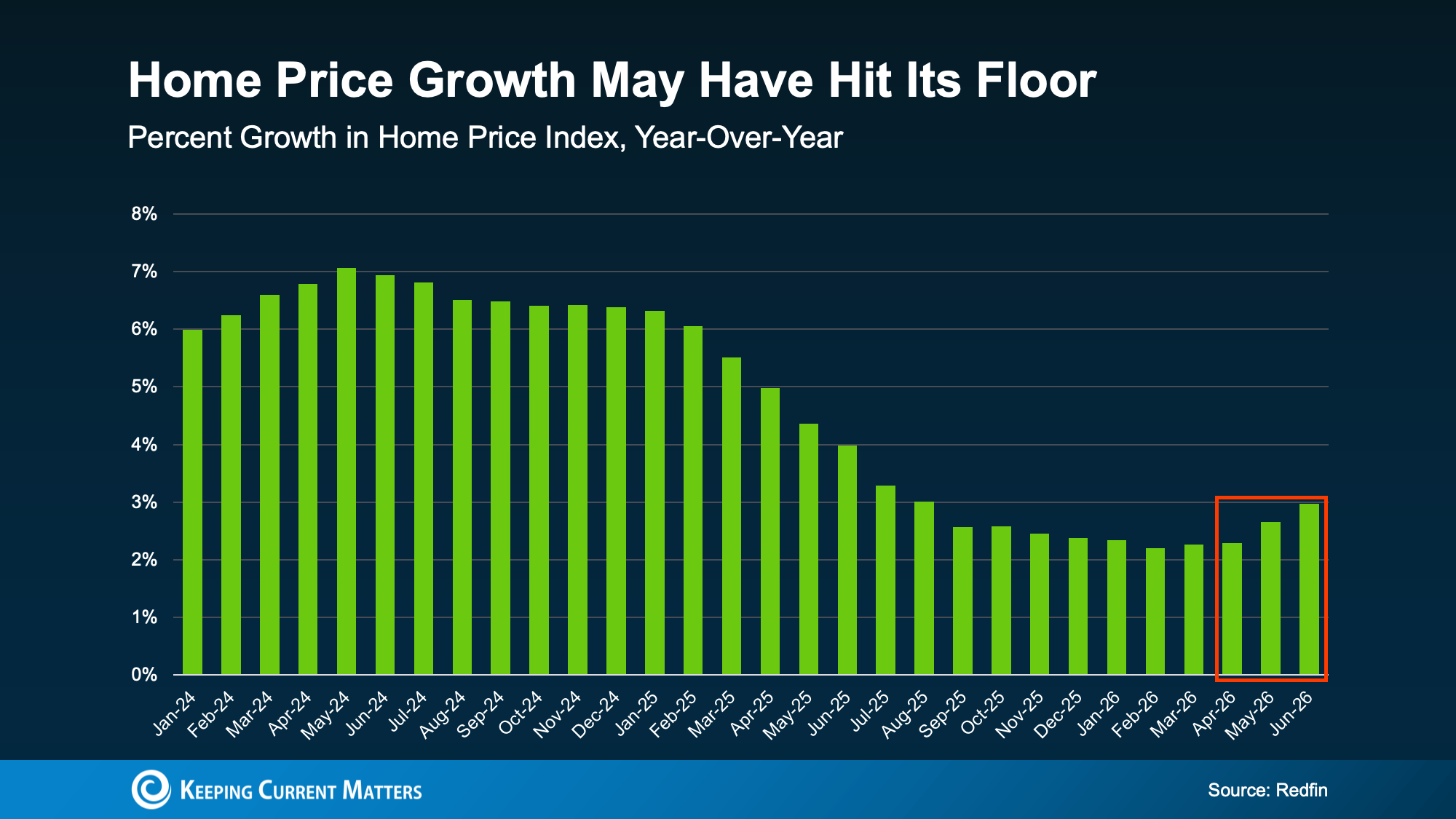
It's still too early to say this is a long-term trend, but there are a few encouraging signs that the market is gaining momentum.
Fewer Housing Markets Are Seeing Price Declines
One of the biggest indicators is the number of markets experiencing falling home prices.
Last year, roughly 36% of the nation's 300 largest housing markets saw prices decline. Since the beginning of 2026, that number has steadily decreased. Today, only about 23% of those markets are seeing price dips.
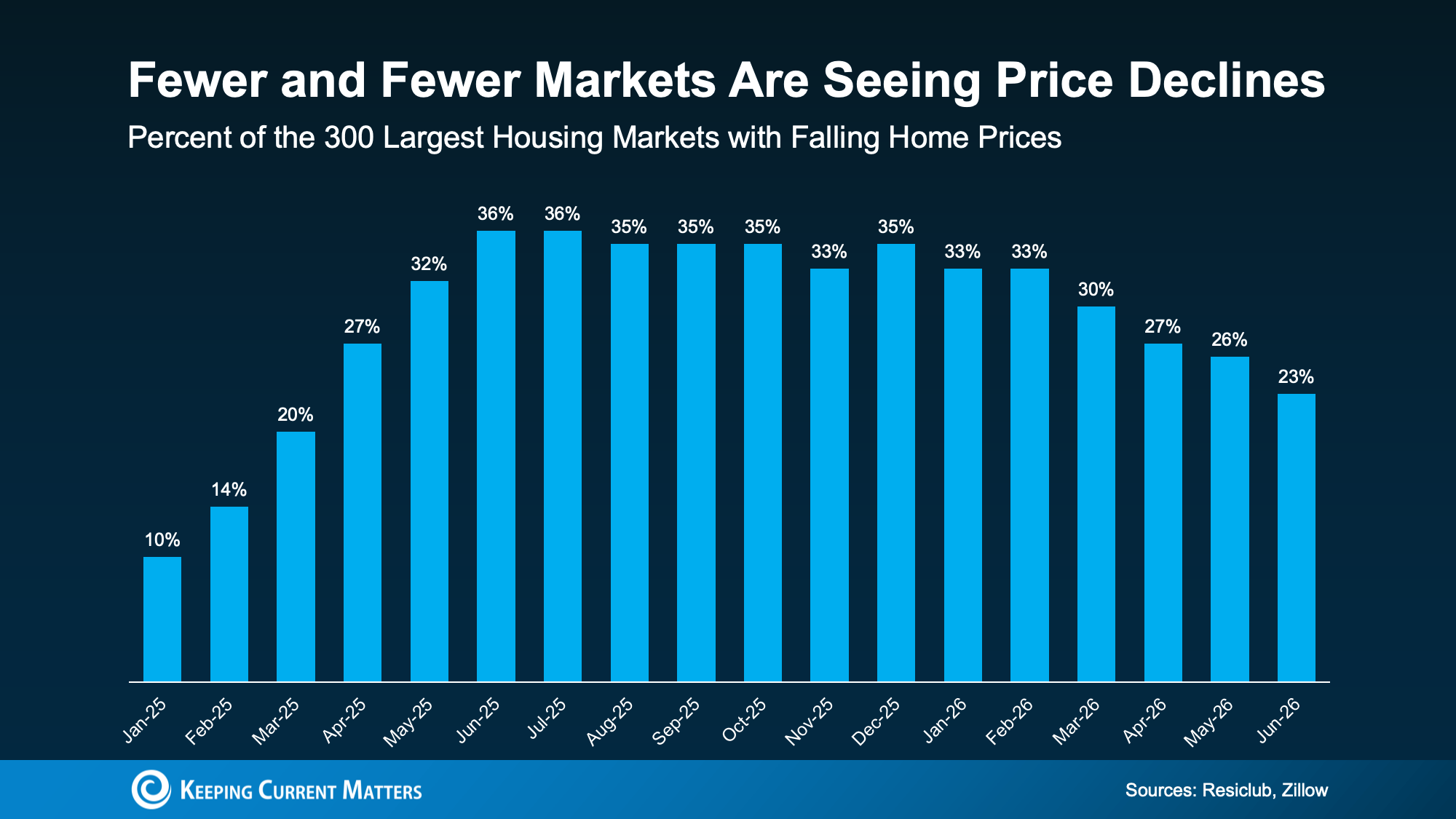
Simply put, more housing markets are moving back into positive price growth.
Industry forecasts also support this trend. Most economists expect home prices to increase by approximately 2.3% nationwide this year, meaning price growth would likely continue strengthening through the second half of 2026.
Every Real Estate Market Is Different
While national trends provide helpful context, real estate is always local.
National home prices are simply an average of hundreds of individual markets. Some areas are seeing stronger appreciation, while others continue to level off. Factors like local inventory, job growth, affordability, and buyer demand all influence what's happening in your specific market.
In fact, more major metro areas are now reporting year-over-year price increases than decreases—a noticeable improvement from where the market stood just a year ago.
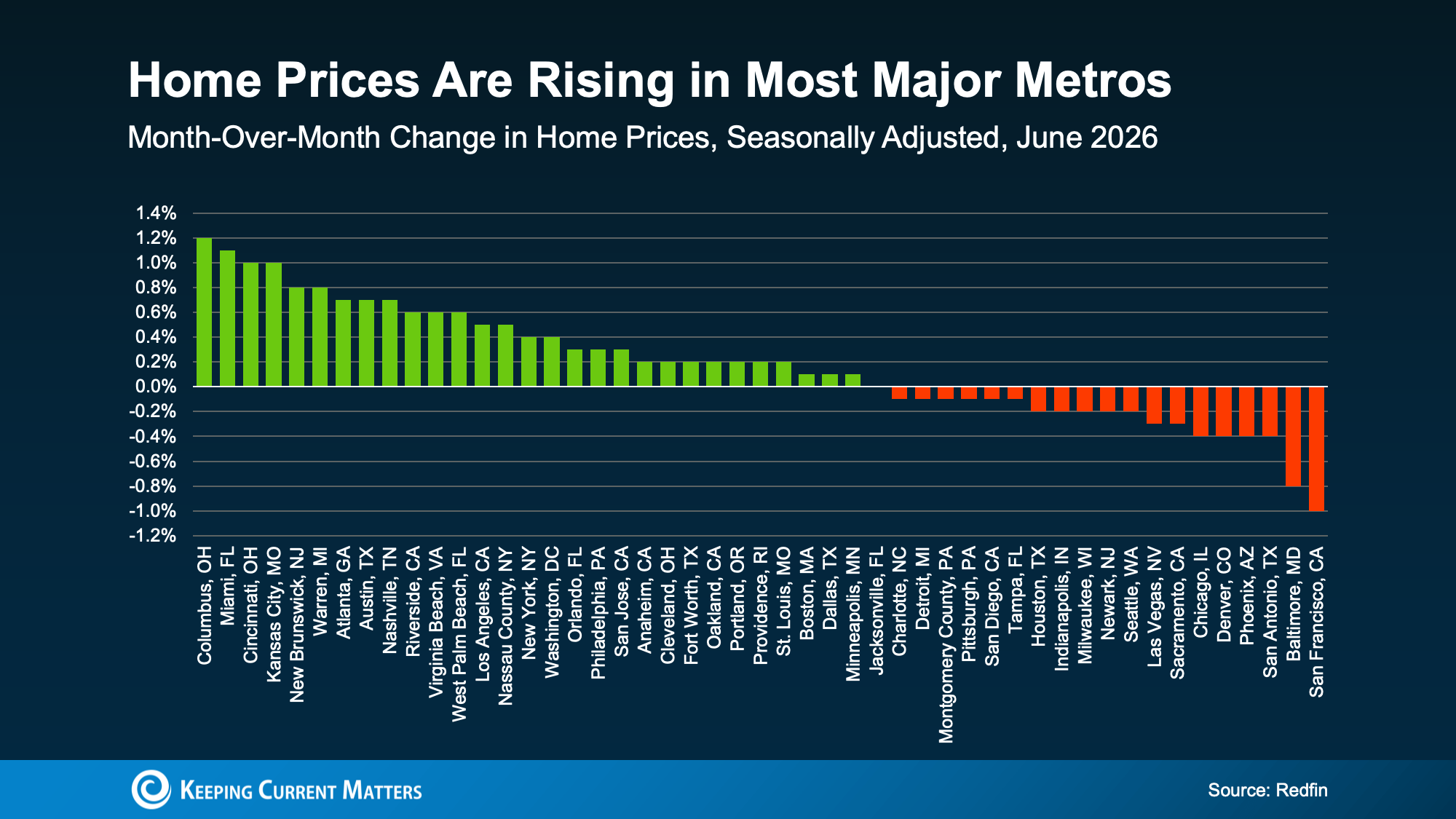
As housing economist Selma Hepp explains, local markets continue to tell very different stories. Areas with strong employment growth and more affordable housing options are seeing some of the strongest price gains.
What This Means for Buyers
The slower pace of price growth over the past year has given many buyers more negotiating power and more predictable pricing.
If home values continue trending upward in your local market, purchasing sooner rather than later could help you avoid paying more for the same home later this year.
What This Means for Homeowners
Even while price appreciation slowed, most homeowners continued building equity.
If home prices begin accelerating again, that equity could grow even faster. The National Association of Realtors projects the typical homeowner could gain around $16,000 in housing wealth this year.
For anyone considering selling, that's encouraging news. Just remember that many markets are still balanced, giving buyers more options than they had during the height of the seller's market.
The Bottom Line
The housing market appears to be entering a new phase. Home price growth isn't skyrocketing, but the latest data suggests it may be starting to gain momentum again.
Whether you're buying your first home, planning your next move, or wondering what your current home is worth, understanding what's happening in your local market is far more valuable than following national headlines.
If you'd like to know what home prices are doing here in the Upstate, we are happy to help you understand what today's market means for your goals.