Published October 22, 2026
North Carolina vs. South Carolina: Which State Is Right for Your Move?

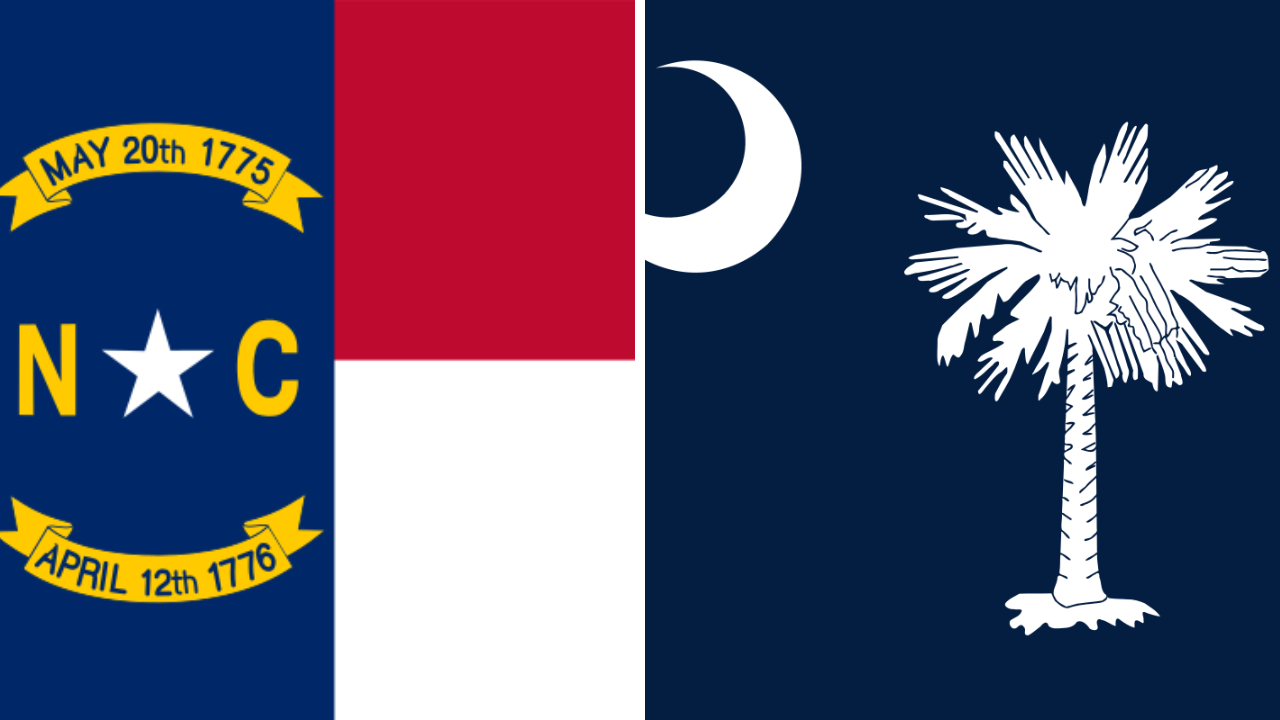
If you're considering relocating to either North Carolina or South Carolina, choosing between the two can feel surprisingly overwhelming. Both states have their own unique attractions — and their own challenges — that make the decision harder than it might seem at first. Here's the good news: the Carolinas are, in our view, some of the best places to live in the United States. So really, you can't go wrong either way. This breakdown is meant to help you figure out which state is the better fit for you.
We're your hometown real estate team, serving the Upstate of South Carolina for over 20 years. We hear from people daily — calls, texts, social media messages, and emails — about relocating to the Greenville, SC area. If you're within 1 to 100 days of moving to Greenville, reach out. We'd love to be your resource for all things Greenville.
Deciding between North and South Carolina is a puzzle a lot of people wrestle with. If you're moving from California, New York, Dallas, or anywhere in Florida, you're in good company — we've helped numerous clients from those exact places make the move here.
Size and Population
North Carolina is considerably larger than South Carolina, covering more than 53,000 square miles compared to South Carolina's roughly 32,000. The population gap is just as significant: North Carolina has over 10 million residents, while South Carolina has just over 5 million — meaning North Carolina has roughly double the population in a state that's also larger in land mass.
North Carolina's cities are bigger and more numerous. Raleigh, the state capital, has nearly 500,000 residents; Charlotte has approximately 875,000; Winston-Salem, Durham, and Greensboro each fall between 250,000 and 300,000; and Fayetteville has over 200,000. South Carolina, by comparison, has just three main population centers: Charleston (the largest, at roughly 150,000), Columbia (the capital, at about 140,000), and Greenville (about 75,000). Greenville's city-limit population is a bit misleading, though — when you count the entire county, the number jumps to over 500,000. For perspective, Charleston, South Carolina's most populous city, would only rank as the seventh most populous city in North Carolina.
North Carolina clearly dominates in population and urban density, with each of its major cities offering its own distinct charm, vibrant cultural scene, and thriving amenities. If big-city living is what you're after, North Carolina is the stronger fit. South Carolina, on the other hand, leans more rural, offering a quieter, more relaxed lifestyle. Its major cities — Greenville in the upstate, Columbia in the center, and Charleston on the coast — are spread evenly across the state, with plenty of rural, farmland-dominated country in between.
Mountains
Both states offer mountain living, but North Carolina takes the clear edge here. Nearly a quarter of the state is covered by stunning mountain ranges stretching from the foothills all the way to Mount Mitchell, the highest point on the entire East Coast. Popular mountain towns include Boone, Asheville, and Blowing Rock, and the region offers whitewater rafting, snow skiing, zip lining, hiking, biking, and just about every outdoor activity imaginable. Outdoor enthusiasts tend to fall hard for the North Carolina mountains.
Lakes
North Carolina has roughly triple the number of lakes compared to South Carolina, with Lake Norman — the largest man-made lake on the East Coast, located just outside Charlotte — being the most notable. Lake Wylie, just south of Charlotte, is another popular option.
That said, South Carolina holds its own when it comes to standout lakes. Lake Marion and Lake Moultrie sit between Charleston and Columbia, and Lake Murray is a favorite in the central part of the state. In the Greenville area specifically, Lake Hartwell — which borders South Carolina and Georgia — has hosted multiple Bassmaster Classics. Two other favorites are Lake Keowee, set in the foothills and home to some of South Carolina's most affluent real estate (including the Cliffs communities and their golf courses), and Lake Jocassee, three-quarters of which remains intentionally undeveloped, offering clear water, mountain views, and a peaceful setting.
Beaches
Both states boast gorgeous coastlines and arguably some of the best beaches on the Eastern Seaboard.
North Carolina's most popular beach destination is the Outer Banks, which gained even more attention after the Netflix show of the same name — interestingly, that show was actually filmed in Charleston, South Carolina. Other popular North Carolina beaches include Wrightsville Beach (famous for the Wright brothers' first flight), Emerald Isle (12 miles of shoreline), Kill Devil Hills, Nags Head, and Oak Island.
South Carolina tends to draw the most visitors and vacationers overall, with top destinations including Hilton Head Island, Kiawah Island (home to the famous Ocean Course), Isle of Palms and Folly Beach near Charleston, and of course Myrtle Beach, known worldwide (though it's on the more commercialized side). For something quieter, Edisto Island is a hidden gem — small, secluded, and largely under the radar.
Taxes
There are some real differences in the tax systems between the two states. Overall, North Carolina tends to carry a heavier tax burden than South Carolina — North Carolina ranks 31st nationally in overall tax burden, while South Carolina ranks 40th. North Carolina's sales tax ranges from 4.75% to 7.75%, with most municipalities landing at 7% or higher, while South Carolina has a flat statewide sales tax rate of 6%.
On property taxes, North Carolina generally has higher rates on assessed home values. In South Carolina, tax rates differ significantly between a primary residence and an investment property, second home, or vacation property — so if you're considering a rental, lake house, or beach house in South Carolina, expect a notably higher tax rate than you'd pay on a primary residence. It's worth checking with a local realtor for specifics in either state.
Public Education
There isn't a dramatic difference in public education between the two states, though North Carolina does test slightly higher overall — likely a byproduct of its larger population and greater number of schools and students. Both states operate on a similar structure, with school districts governed by local school boards and elected superintendents, reflecting a shared commitment to education and community involvement. School quality is highly hyper-local in both states, so it's worth researching individual school zones directly. Helpful resources include usnews.com/education, bestschools.org, and niche.com, all of which offer insight into test scores, diversity, curriculum, and teacher credentials — along with digging into each school's own website.
Higher Education
Both states offer a wide range of affordable, in-state higher education options. North Carolina is particularly well known for academics and research, home to institutions like Duke, UNC Chapel Hill, NC State, and Wake Forest — several of which, especially Duke and UNC, are also basketball powerhouses. Other notable North Carolina schools include East Carolina University, Appalachian State University, and Western Carolina University.
South Carolina's schools are less nationally recognized academically, but the state has its own standouts, led by the University of South Carolina and Clemson University — both known primarily as football and baseball schools. College football is a major part of life in South Carolina; if you relocate here, one of the first questions you'll get asked is which team you pull for. Other notable South Carolina schools include Furman University, Wofford College, College of Charleston, and The Citadel.
On the professional sports front, North Carolina is the only one of the two states with high-level professional teams: the Carolina Panthers (NFL) and Charlotte Hornets (NBA) in Charlotte, Charlotte FC (MLS), and the Carolina Hurricanes (NHL) in Raleigh.
Migration, Real Estate, and Job Growth
By nearly every measure, North Carolina and South Carolina both rank in the top 10 inbound states in the country for net migration. People are moving to both states in large numbers, driven by cost of living, affordability, quality of life, political climate, baby boomers relocating closer to grandchildren, job opportunities, and real estate prices.
On the real estate side, the median home sales price is approximately $377,000 in North Carolina and $370,000 in South Carolina — roughly comparable. For context, the national median is around $420,000, while California's median sits at $860,000 and New York's at $764,000, which helps explain why so many people are drawn to the Carolinas.
Job growth in both states is strong and diverse. North Carolina's job market includes major employers like Duke Energy, Honeywell, Lowe's Home Improvement, Bank of America, and Truist, with the Raleigh area serving as a technology hub for the East Coast. South Carolina has its own share of global employers, including Michelin North America, BMW's main U.S. manufacturing plant, Bosch, Boeing, and GE. Both states have strong job markets in education, technology, and healthcare.
So, Which One Is Right for You?
North Carolina or South Carolina — for some, the two states feel similar; for others, they're worlds apart. Ultimately, it comes down to personal priorities: big-city energy versus a quieter, more rural pace; mountain access versus more evenly spread lake and coastal options; or simply where your family and job opportunities lead you. Either way, you really can't go wrong.
Thinking about a move to the Carolinas? Whether you're leaning toward North Carolina or South Carolina, we're here to help. Reach out by call, text, or email — we're your hometown real estate resource for all things Greenville, and we'll be putting out new videos and posts about living here every week.