
Published May 1, 2024
Renting vs. Buying: Which is the Smarter Choice Now?

You may have come across recent news reports suggesting that renting is currently more affordable than buying a home. While this might seem accurate based solely on monthly payments, there's a crucial factor these reports often overlook: home equity. Let's delve into how significant equity can be and why it should be a key consideration in your decision-making process.
What the Headlines Are Based On
The graph below compares national data on the median rental payment from Realtor.com against the median mortgage payment from the National Association of Realtors (NAR). As depicted, particularly if you're seeking a modest living space, renting can indeed be more cost-effective on a monthly basis:
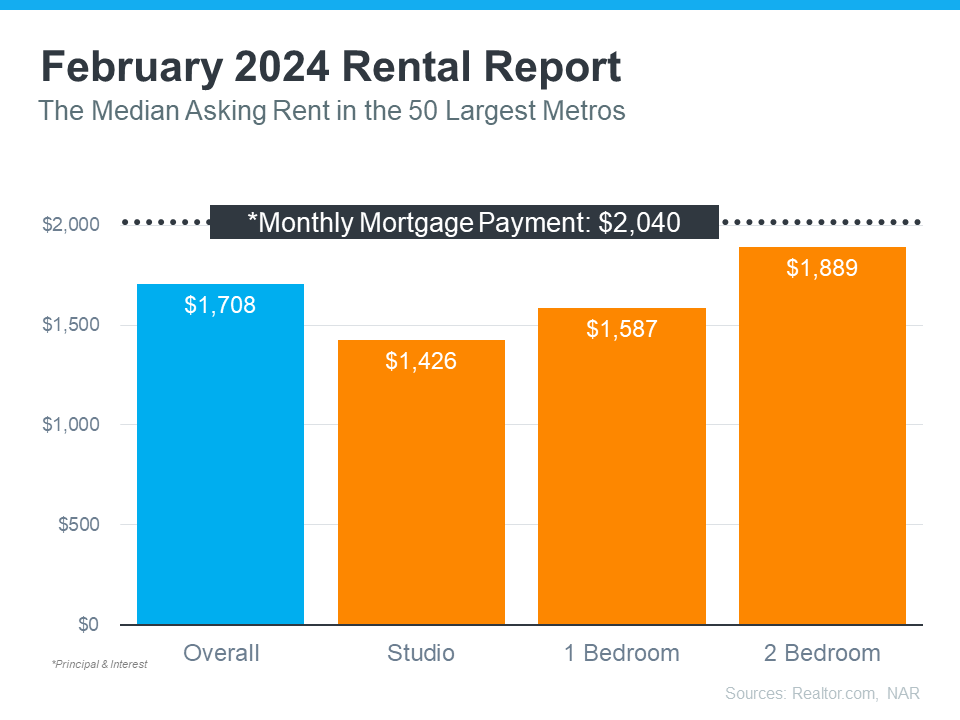
However, if you're in the market for a two-bedroom residence, the difference between the median rent and mortgage payment begins to narrow, potentially becoming more manageable. The median monthly mortgage payment stands at $2,040, whereas the median monthly rent for a two-bedroom unit is $1,889, translating to a difference of approximately $151 per month. But, here's where equity comes into play.
How Equity Changes the Game
When you rent, your monthly payments contribute solely to covering your housing expenses and your landlord's costs. Essentially, apart from possibly saving a bit more each month and potentially receiving your rental deposit back upon moving, the money you allocate toward housing is essentially lost.
Conversely, purchasing a home transforms your monthly mortgage payment into an investment. As you make these payments and gradually reduce your home loan balance, you're simultaneously building equity. Furthermore, this equity receives an additional boost as home values appreciate over time, which is a common trend in real estate.
To better illustrate the rapid accumulation of equity, consider the data below. Fannie Mae and Pulsenomics conduct the Home Price Expectations Survey (HPES) quarterly, querying over 100 economists, real estate professionals, and market strategists regarding their projections for home prices. The latest findings indicate a continued increase in home prices over the next five years.
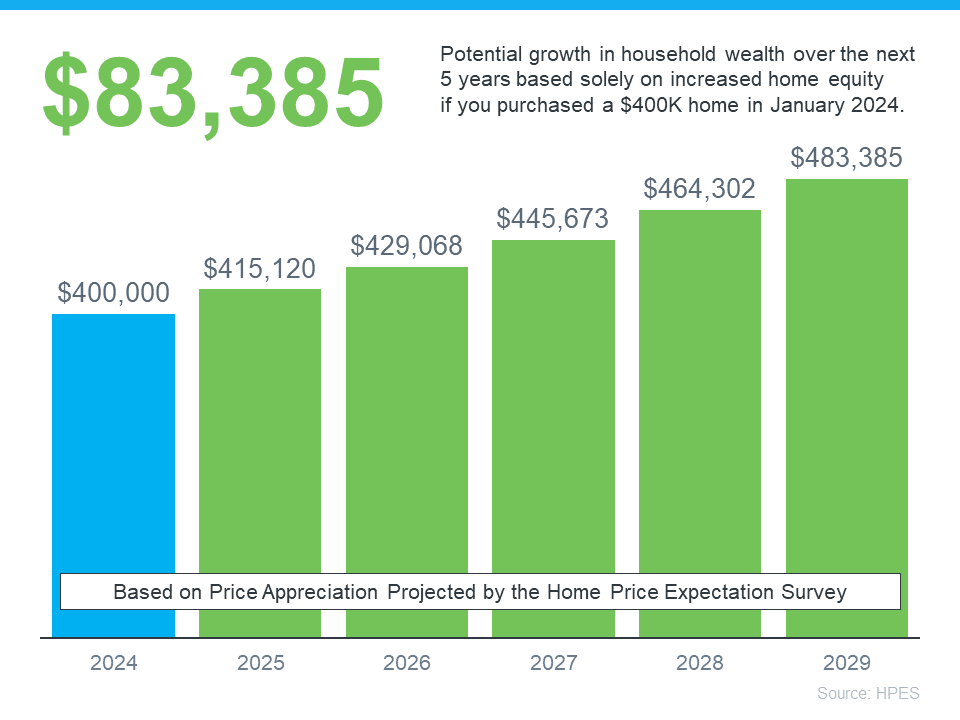
For instance, if you bought a home at the beginning of this year for $400,000 and intend to stay for five years, based on HPES projections, you could potentially accrue over $83,000 in household wealth through the appreciation of your home's value.
Comparative Analysis
Now, let's compare this equity accumulation to the scenario of renting, using the earlier median rent figure:
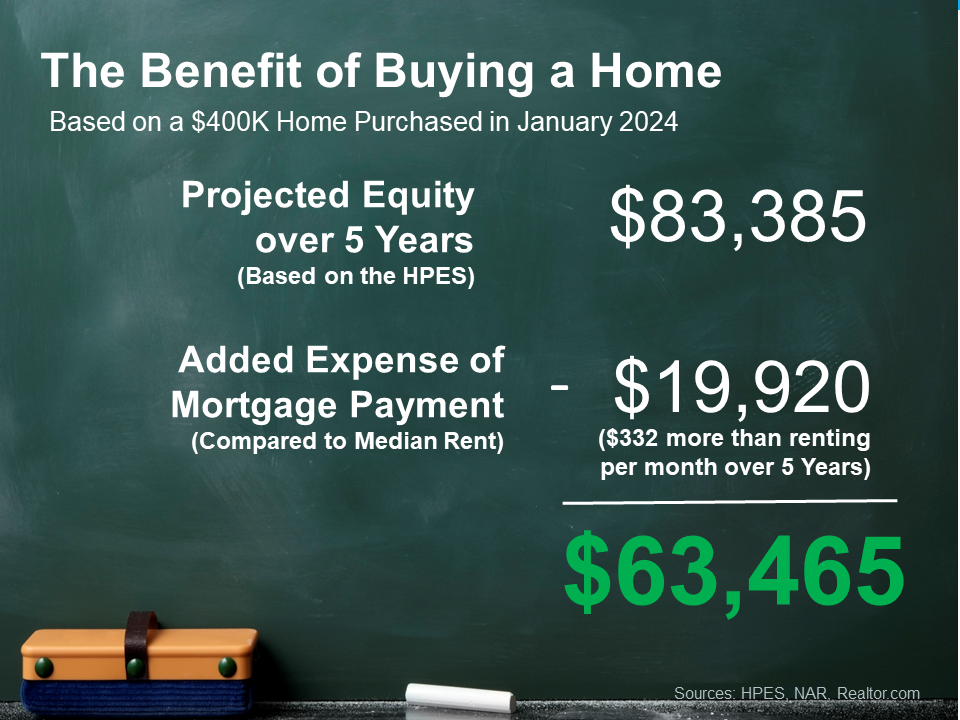
While renting might yield some monthly savings, it comes at the cost of forgoing potential equity gains.
Bottom Line
In essence, purchasing a home offers a unique benefit that renting cannot match—the opportunity to build equity. If you're interested in leveraging long-term home price appreciation, consider consulting a local real estate agent to explore your options.
Ultimately, whether renting or buying is more advantageous depends on your individual financial circumstances. If the numbers align favorably and you're financially prepared, recognizing the value of equity could be the decisive factor in realizing that purchasing a home is the better long-term investment.